Tuesday, February 21, 2023


 Next upcoming important chapters for NEET are: 


  • Morphology of flowering plants
  • Sexual Reproduction in Flowering Plants
  • Molecular Basis of Inheritance
  • Principles of Inheritance and Variation
  • Biological Classification

Morphology of flowering plants

Morphology refers to the study of the form and structure of living organisms. The morphology of flowering plants includes the study of their various parts, their functions and their relationships with each other.  The parts of a flowering plant include the root system and shoot system (the stem, the leaves, the flowers, the fruits and seeds). Each of these parts has a specific morphology that contributes to the overall function of the plant.
          If you pull out any weed you will see that all of them have roots, stems and leaves. They may be bearing flowers and fruits. The underground part of the flowering plant is the root system while the portion above the ground forms the shoot system.


Stem:

The stem of a flowering plant provides support for the plant and serves as a conduit for water and nutrients to move from the roots to the leaves. The stem can be divided into several sections, including the nodes, internodes, and buds.

Leaves:

Leaves are the main photosynthetic organs of a flowering plant. They are responsible for producing food for the plant through the process of photosynthesis. Leaves can be classified into two main types: simple leaves and compound leaves. Simple leaves have a single blade, while compound leaves have multiple leaflets.

Flowers:

Flowers are the reproductive structures of a flowering plant. They are responsible for producing seeds, which can grow into new plants. Flowers can have a wide range of morphological characteristics, including the number of petals, the arrangement of the petals, and the shape of the reproductive structures.

Fruits:

Fruits are the mature ovaries of a flowering plant. They contain seeds and are responsible for protecting and dispersing the seeds. Fruits can have a wide range of morphological characteristics, including their shape, size, and texture.

Understanding the morphology of flowering plants is important for a variety of reasons, including plant identification, plant breeding, and understanding the ecological roles of plants in their natural environments.


We can discuss each morphological character in detail.

Root

The roots are Ortho geotropic (Move towards gravity) and Apo phototrophic (Move away from the sun light) in nature. The main functions of roots are 1) absorbing water and nutrients from the soil, 2) Anchorage, 3) storage of food, 4) synthesis of Plant growth regulators (PGRs).


The roots which can directly arise from radicle are called Primary roots.  Taproots have a single main root that grows deep into the soil, while fibrous roots have many small roots that spread out close to the soil surface. The root system can be divided into two main types:

1) Taproot system

2) Adventitious root system

1) Taproot System:
  • The taproot is usually formed from the radicle of the seed, which is the first structure to emerge from the seed during germination.
  • The taproot is thick and fleshy and serves as a storehouse for food.
  • The taproot system is common in dicotyledonous plants. Ex: Carrot, Beetroot and Dandelion, Mustard.
  • The primary roots and its branches constitute the tap root system.
2) Adventitious root System:
  • Roots arise from any part of the plant except radicle. These are again divided into fibrous roots and foliar roots.
  • Fibrous roots are many small roots that arise from the base of the stem, that can grow close to the soil surface. The fibrous roots are thin and spread out in all directions.
  • The fibrous root system is common in monocotyledonous plants such as grasses, wheat and rice.
  • Foliar roots arise from leaves (Ex: Bryophyllum, Bignonia).
In dicots primary roots are long lived but in monocots primary roots are short lived (Ephemeral) and replaced with fibrous roots.

Root modifications:

1. Storage roots
2. Adventitious roots
3.Prop roots
4. Pneumatophores
5. Contractile roots

Roots can also undergo modifications to suit the specific needs of the plant. Some of the common modifications of roots are:
  1. Storage Roots: Some plants have roots that are modified to store food. Examples include carrots, sweet potatoes, radish and turnips.
  2. Adventitious Roots:
    Adventitious roots can grow from a part of the plant other than the radicle, such as stem or leaves. These roots can help anchor the plant in the soil or provide additional support. Examples of plants with adventitious roots include Asparagus, ivy and corn.
  3. Prop Roots:
    Prop roots are modified roots that grow from the stem and help support the plant. Eg: banyan trees and corn.
  4. Pneumatophores:
    Pneumatophores are modified roots that grow above the ground in swampy areas. They help the plant obtain oxygen from the air. Eg: mangroves and cypress trees.
  5. Stilt roots: These roots develop from the lower nodes of the stem and give additional support to plants. Eg: Maize and Sugarcane.
  6. Nodular roots: In Fabaceae members, roots having nodules called as nodular roots. nodular roots possess symbiotic bacteria Rhizobium helps in nitrogen fixation. Eg: Groundnut and Beans.
Understanding the different types of root systems and their modifications is important for plant cultivation and management. For example, knowing which plants have taproots or fibrous roots can help gardeners determine how to space and water their plants. Additionally, understanding the different modifications of roots can help in the selection of plants for specific growing conditions.

Regions of the Root: The root of a plant is divided into different regions that serve different functions. The main regions of the root are:

1) Root cap
2) Meristematic region
3) Elongation region
4) Maturation region
5) Root hairs

1) Root Cap: The root cap is a protective structure at the tip of the root that covers the apical meristem, which is responsible for the growth of the root. The root cap secretes a lubricating substance that helps the root push through the soil as it grows.
2) Meristematic Region: The meristematic region is the area of the root where cell division occurs. This region is responsible for the growth of the root, and it is located just behind the root cap.
3) Elongation Region: The elongation region is the area of the root where cells become longer and the root begins to grow in length. This region is located behind the meristematic region and is responsible for the primary growth of the root.
4) Maturation Region: The maturation region is the area of the root where cells differentiate into specific cell types, such as parenchyma, collenchyma, and sclerenchyma cells. This region is located behind the elongation region and is responsible for the secondary growth of the root.
5) Root Hairs: Root hairs are small, finger-like projections that extend from the epidermal cells of the root. They increase the surface area of the root, allowing it to absorb water and nutrients more efficiently. 
Understanding the different regions of the root is important for understanding the growth and development of plants. Different regions of the root are responsible for different functions, and their proper development is crucial for the overall health and vitality of the plant.

 The STEM

  1. The stem is the ascending part of the axis bearing branches, leaves, flowers and fruits.
  2.  It develops from the plumule of the embryo of a germinating seed. 
  3. The stem bears nodes and internodes. The region of the stem where leaves are born are called nodes while internodes are the portions between two nodes. 
  4. The stem bears buds, which may be terminal or axillary. 
  5.  It conducts water, minerals and photosynthates. Some stems perform the function of storage of food, support, protection and of vegetative propagation.
Stem modifications: 

1) Underground stem modifications: 
2) Aerial stem modification:
3) Sub aerial stem modification: 


1) Underground stem modifications: 

  • Underground stem modifications are specialized structures that plants have developed to adapt to various environmental conditions.
  • It helps plants to survive in a variety of environments by providing storage for nutrients and water, enabling vegetative propagation, and helping plants to spread and colonize new areas.

a) Rhizomes: These are horizontal underground stems that grow parallel to the soil surface. They have nodes and internodes, from which roots and shoots arise. Ex: Ginger, Turmeric and many grasses, ferns, and some woody plants.
b) Tubers: These are enlarged, fleshy underground stems that store nutrients (food) and water. Eyes show vegetative propagation, Ex: potatoes and yams.
c) Bulbs: These are underground stems (reduced) that are surrounded by fleshy storage leaves called scales. Ex: Onions and lilies.
d) Corms: These are rounded underground stems that grow vertically in a particular depth of the soil, that store nutrients and water. Ex: Colocasia, Amorphophallus (zaminkand), gladiolus and crocus.

2) Aerial stem modification:

a) Stem tendrils: These are thin, coiling structures that arise from stems and help the plant to climb or support itself. Axillary or terminal bud is modified as tendrils.
Ex: From axillary bud: Cucumber, pumpkin, watermelon, From terminal bud: Grapevine.
b) Thorns: These are modified stems that have become hardened and sharp to protect the plant from herbivores. Ex: Bougainvillea, Citrus.
c) Phylloclade: In xerophytes stem is modified into green colored structures for photosynthesis. Ex: Opuntia, Casuarina.

3) Sub aerial stem modification: 

a) Runners: Some plants spread to new niches with adventitious roots at nodes. Ex: Grasses, Strawberry, Oxalis
b) Stolon's: It is a slender, aerial lateral branches arising from the base of the main axis and grows obliquely downwards to touch the ground and produce adventitious roots. Ex: Nerium, Jasmine
c) Sucker: Underground branch grows horizontally beneath the soil and come out obliquely upward called sucker. Ex: Chrysanthemum.
d) Offset: A lateral branch with short internodes and each node bearing a rosette of leaves and a tuft of roots is found in aquatic plants like Pistia and Eichhornia.

THE LEAF


Tuesday, February 14, 2023

Cell Cycle and Cell Division- Part-3 (Meiosis)


Meiosis: It involves two sequential cycles of nuclear and cell division called meiosis I and meiosis II but only a single cycle of DNA replication. It is a type of cell division that produces gametes, which are reproductive cells such as eggs and sperm
  • It is a crucial process in sexual reproduction because it produces genetically diverse gametes that can combine during fertilization to create offspring with unique genetic traits. During meiosis, a diploid cell (containing two sets of chromosomes) divides twice, resulting in four haploid cells (containing one set of chromosomes). 
  • The first division separates homologous pairs of chromosomes, while the second division separates sister chromatids. This results in the creation of four genetically diverse haploid cells, each with a unique combination of chromosomes.
  • Meiosis is essential for the formation of gametes in all sexually reproducing organisms, including humans, animals and plants. 
  • The diversity of genetic traits that result from meiosis is a key factor in the survival and evolution of species

Meiosis is divided into two main stages: meiosis I and meiosis II. Each stage is further divided into several sub-stages.

For easy visualization of the entire process of meiosis this gif will help more


Source


Meiosis-1: 

1) Prophase-1Chromosomes condense and pair up with their homologous pair, forming a tetrad. Crossing over may occur during this stage, where genetic material is exchanged
between the paired chromosomes.

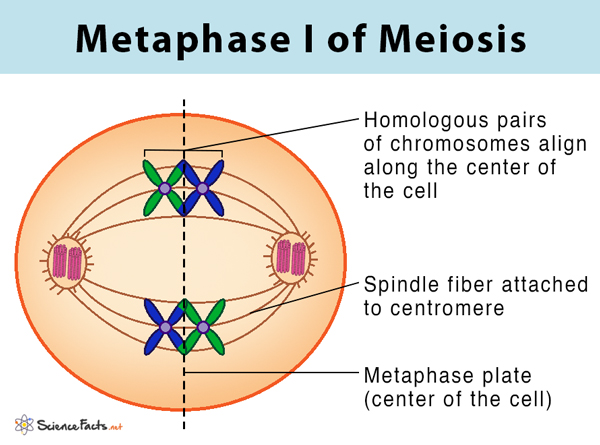
2) Metaphase-1: Tetrads align at the cell equator.

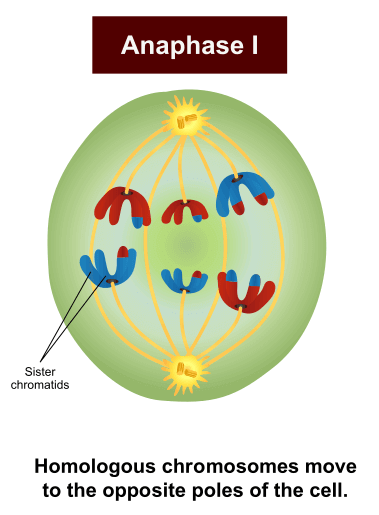
3) Anaphase-1: Homologous pairs separate and are pulled to opposite poles of the cell.

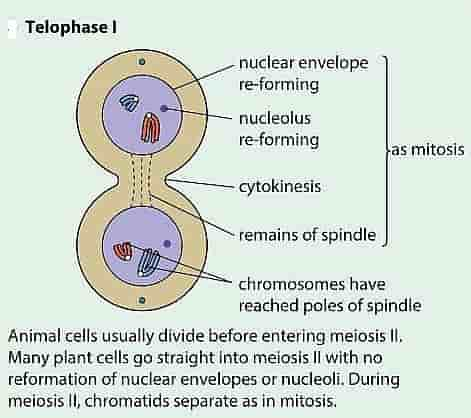
4) Telophase-1: The cell divides into two daughter cells, each with one set of chromosomes.


Prophase-1:  Prophase I can be further divided into five sub-stages:
  1. leptotene
  2. zygotene
  3. pachytene
  4. diplotene
  5. diakinesis
1) Leptotene: the chromosomes begin to condense, and the nuclear envelope starts to break down.
2) Zygotene: the homologous chromosomes begin to pair up and undergo synapsis, forming bivalents.
3) Pachytene: the bivalents continue to condense and crossing over occurs.
4) Diplotene: the bivalents start to separate, but remain connected at points called chiasmata. In oocytes of some vertebrates, diplotene can last for months or years.
5) Diakinesis: This is marked by terminalization of chiasmata. By the end of diakinesis, the nucleolus disappears and the nuclear envelope also breaks down. Diakinesis represents transition to metaphase.

Overall, prophase I is a crucial stage in meiosis I that allows for genetic variation through crossing over, pairing of homologous chromosomes, and bivalent formation.


Source:
1) https://d3jlfsfsyc6yvi.cloudfront.net/image/mw:1024/q:85/https%3A%2F%2Fhaygot.s3.amazonaws.com%3A443%2Fcheatsheet%2F11135.PNG

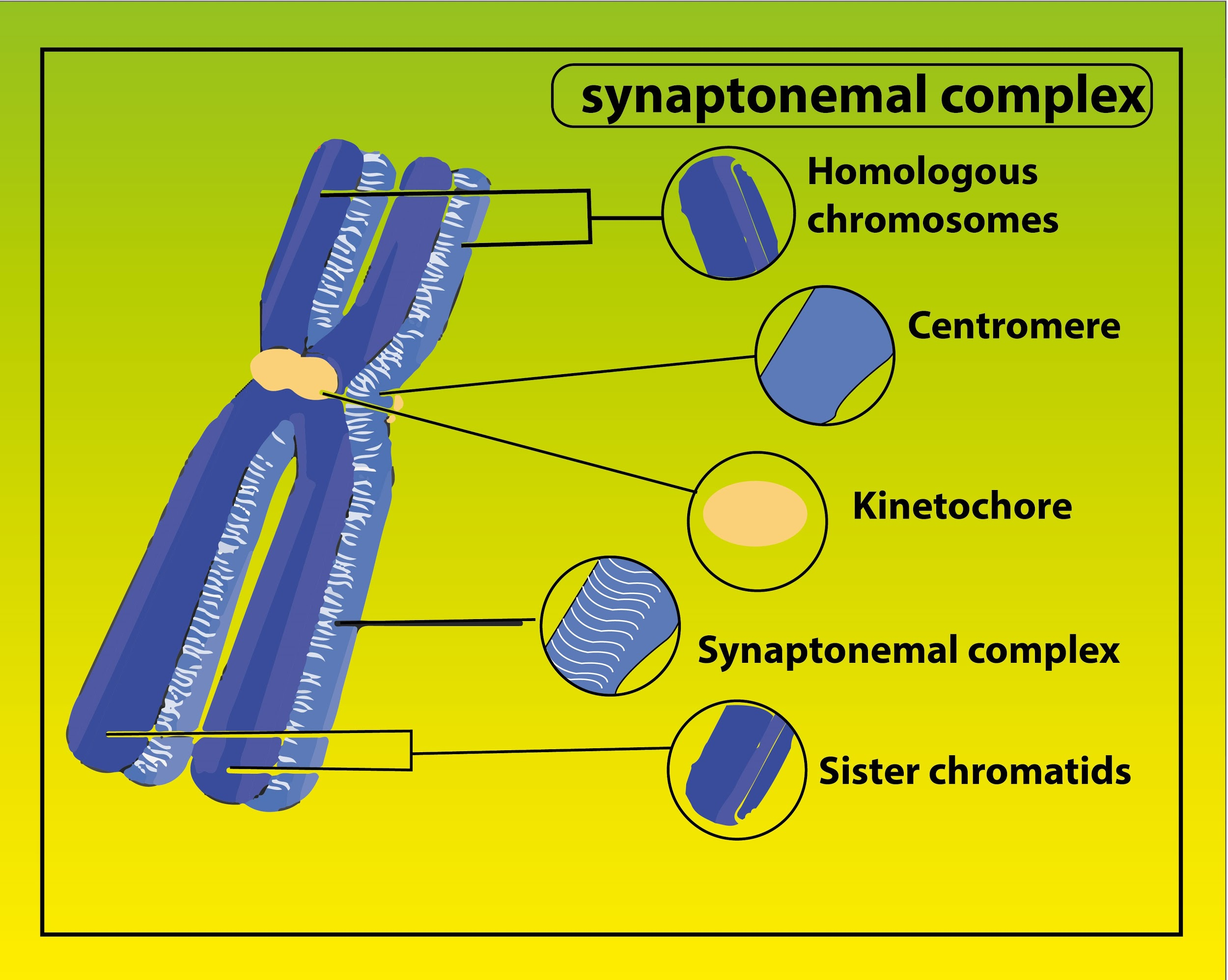
         Synaptonemal complex:  


Metaphase-1: The bivalent chromosomes align on the equatorial plate. The microtubules from the opposite poles of the spindle attach to the kinetochore of homologous chromosomes.


Anaphase-1: The homologous chromosomes separate, while sister chromatids remain associated at their centromeres.


SOURCE


Telophase 1: The nuclear membrane and nucleolus reappear; cytokinesis follows and this is called as dyad of cells. The stage between the two meiotic divisions is called interkinesis and is generally short lived. There is no replication of DNA during interkinesis. Interkinesis is followed by prophase II, a much simpler prophase than prophase I.


Meiosis II: This phase resembles a normal mitosis.


Stages:
  1. Prophase II: Chromosomes condense again and spindle fibers begin to form.
  2. Metaphase II: Chromosomes align at the cell equator. the microtubules from opposite poles of the spindle get attached to the
    kinetochores of sister chromatids.
  3. Anaphase II: Sister chromatids separate and are pulled to opposite poles of the cell by shortening of microtubules attached to kinetochore.
  4. Telophase II: the two groups of chromosomes once again get enclosed by a nuclear
    envelope, the cytokinesis follows resulting in the formation of four haploid daughter cells.

Significance of Meiosis:

1) Genetic diversity

2) Maintenance of chromosome number

3) Genetic recombination

4) Prevention of genetic abnormalities

* Variations are very important for the process of evolution.


Previous year NEET questions: 

1) The appearance of recombination nodule on homologous chromosomes during meiosis characterizes

NEET 2022

a) bivalent
b) sites at which crossing over occurs
c) terminalization
d) synaptonemal complex

Answer: b

2) Regarding meiosis, which of the statements is incorrect?

NEET 2022
                            
a) DNA replication occurs in S-phase of meiosis-II
b) Pairing of homologous chromosomes and recombination occurs in meiosis-I
c) Four haploid cells are formed at the end of meiosis-II
d) There are two stages in meiosis, meiosis-I and II

Answer: a

3) which stage of meiotic prophase shows terminilization of chiasmata as its distinctive feature?
NEET 2021

a) Leptotene
b) Zygotene
c) Diakinesis
d) Pachytene

Answer: c

4) Which of the following stages of meiosis involves division of centromere? 

NEET 2021
a) Metaphase-I
b) Metaphase-II
c) Anaphase-II
d) Telophase-II

Answer: c

5) During meiosis I, in which stage synapsis takes place? 

a) Pachytene
b) Zygotene
c) Diplotene
d) Leptotene

Answer: b

6) Dissolution of the synaptonemal complex occurs during

a) zygotene
b) diplotene
c) leptotene
d) pachytene

Answer: b

7) After meiosis-I, the resultant daughter cells have

a) same amount of DNA as in the parent cell in S-phase
b) twice the amount of DNA in comparision to haploid gamete
c) same amount of DNA in comparision to haploid gamete
d) four times the amount of DNA in comparision to haploid gamete

Answer: b

8) Meiosis takes place in 

NEET 2013

a) Meiocyte  
b) conidia 
c) gemmule  
d) megaspore

Ansewer: a


Cell Cycle and Cell Division-Part-2 (MITOSIS)


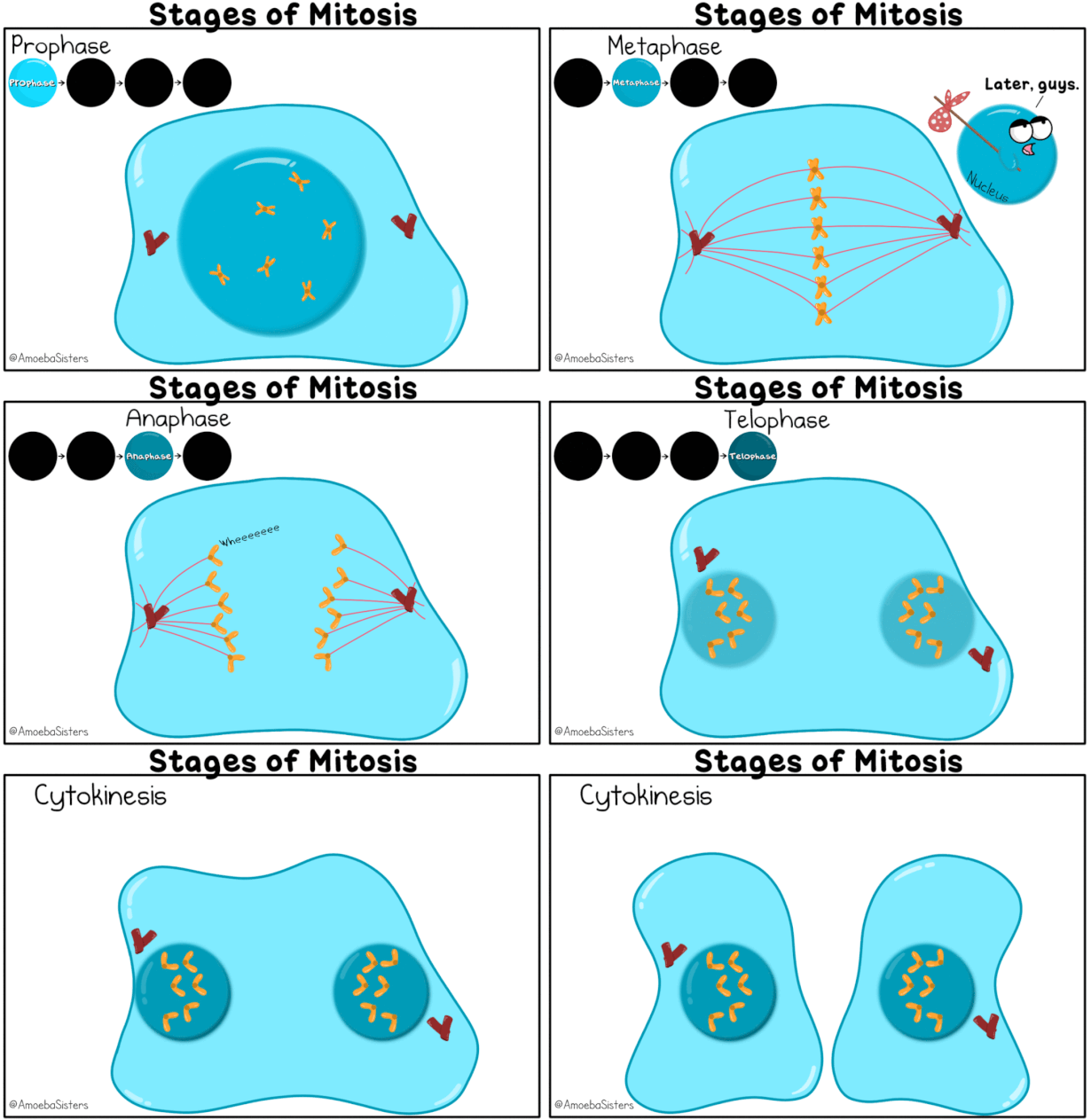
Mitosis is the process of cell division in which a single cell divides into two identical daughter cells, hence called equational division. This process is divided into four stages of nuclear division (karyokinesis). 

1) Prophase

2) Metaphase

3) Anaphase

4) Telophase


Source: https://www.amoebasisters.com/uploads/2/1/9/0/21902384/published/stages-of-mitosis-gif.gif?1530910669

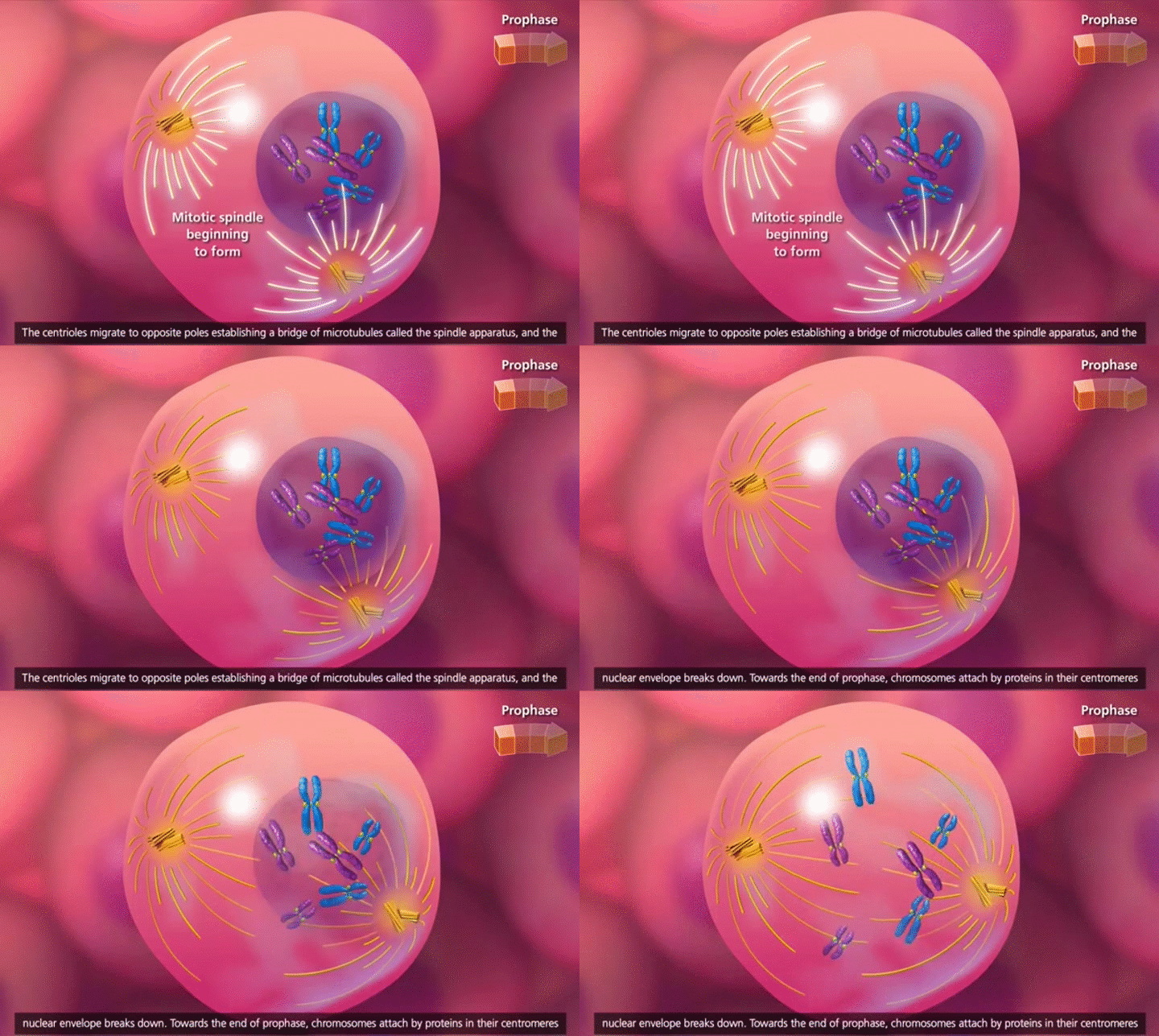
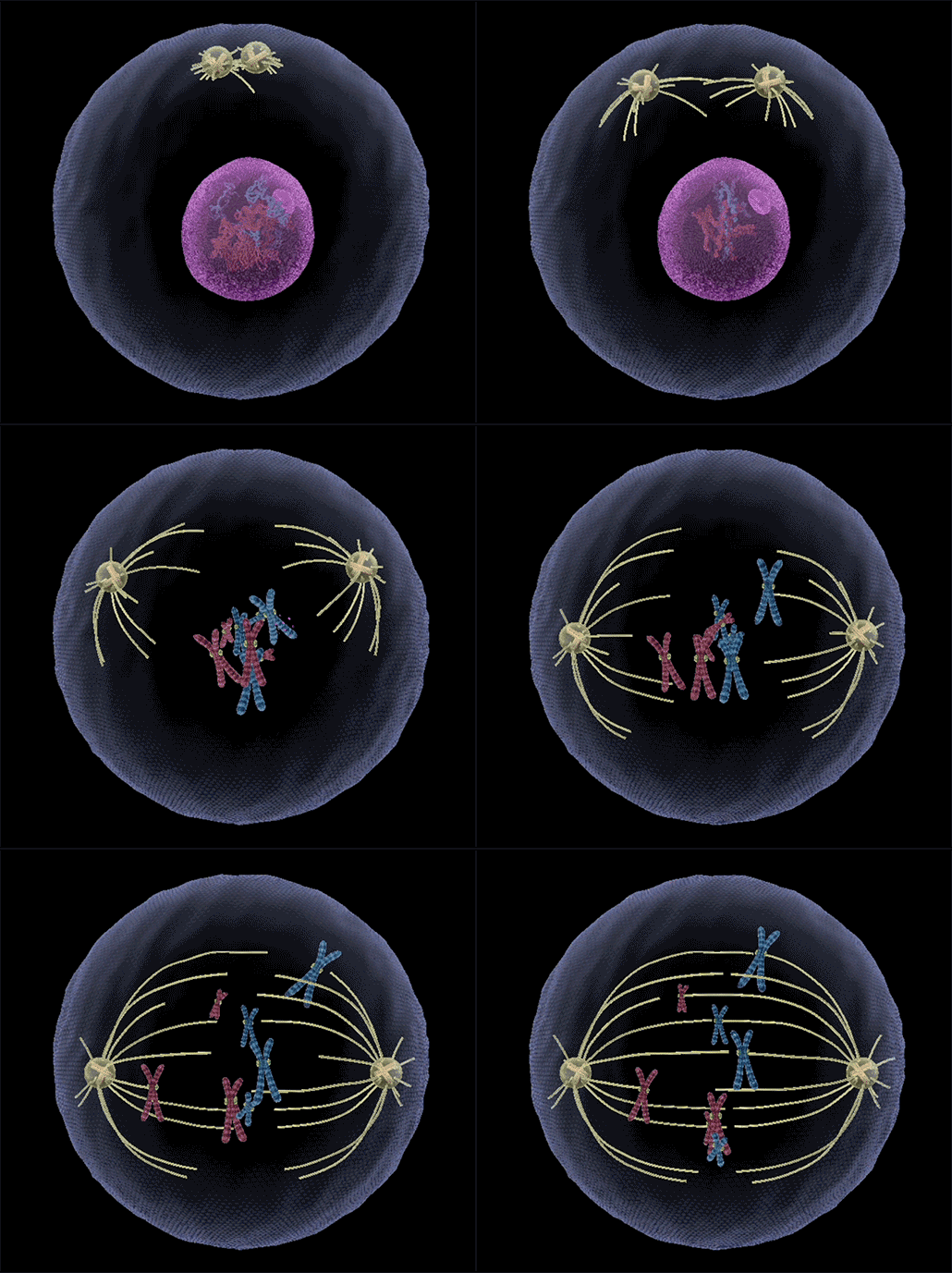
Prophase: 

  • This is the first stage of karyokinesis of mitosis. 
  • Prophase is marked by the initiation of condensation of chromosomal material (which becomes visible under a microscope). 
  • The centrosome moves towards opposite poles of the cellChromosomes are seen to be composed of two chromatids attached together at the centromere. 
  • Each centrosome radiates out microtubules called asters. The two asters together with spindle fibers form mitotic apparatus. 
  • Cells at the end of prophase, when viewed under the microscope, do not show Golgi complexes, endoplasmic reticulum, nucleolus and the nuclear envelope.


Metaphase:

  • The complete disintegration of the nuclear envelope marks the start of the metaphase.
  • Chromosomes are highly condensed in this stage, because of that we can clearly observe the structure and morphology of chromosomes under a microscope 
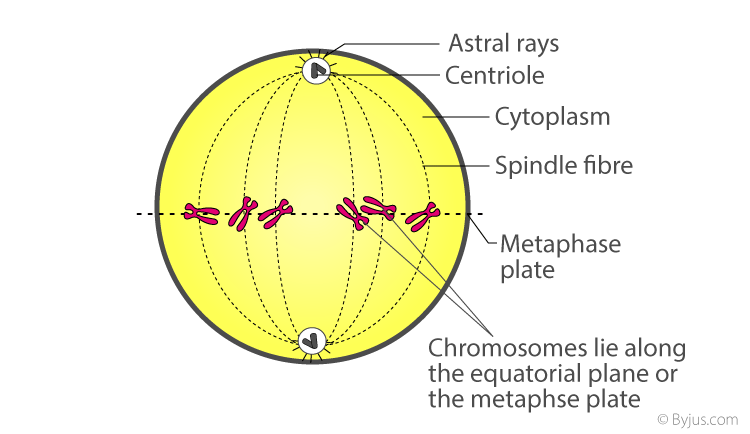
  • During metaphase, the chromosomes align along the equator of the cell (The plane of alignment of the chromosomes at metaphase is referred to as the metaphase plate). This is also called Congression.
  • Congression: Arrangement of all chromosomes at equatorial plate/metaphasic plate.
  • The spindle fibers attach to the centromeres of the chromosomes and prepare to pull them apart.

The key features of metaphase are:
  1. Spindle fibers attach to kinetochores of chromosomes. 
  2. Chromosomes are moved to spindle equator and get aligned along metaphase plate through spindle fibers to both poles.
Q) How many spindle fibers are present in metaphase?
A) 96


Source: 
Anaphase: 
  • During anaphase, the spindle fibers shorten and pull the sister chromatids apart
The key events in this phase are: 
  1. Centromeres split and chromatids separate. 
  2. Chromatids move to opposite poles.
Telophase: 

This is the final stage of karyokinesis. During this stage, the chromosomes reach the opposite ends of the cell and begin to uncoil. The spindle fibers begin to break down and a new nuclear envelope forms around each set of chromosomes.

The key events are:  
  1. Chromosomes cluster at opposite spindle poles and their identity is lost as discrete (seperate) elements.
  2. Nuclear envelope develops around the chromosome clusters at each pole forming two daughter nuclei. 
  3. Nucleolus, Golgi complex and ER reform.


Cytokinesis: (Cytoplasmic division)

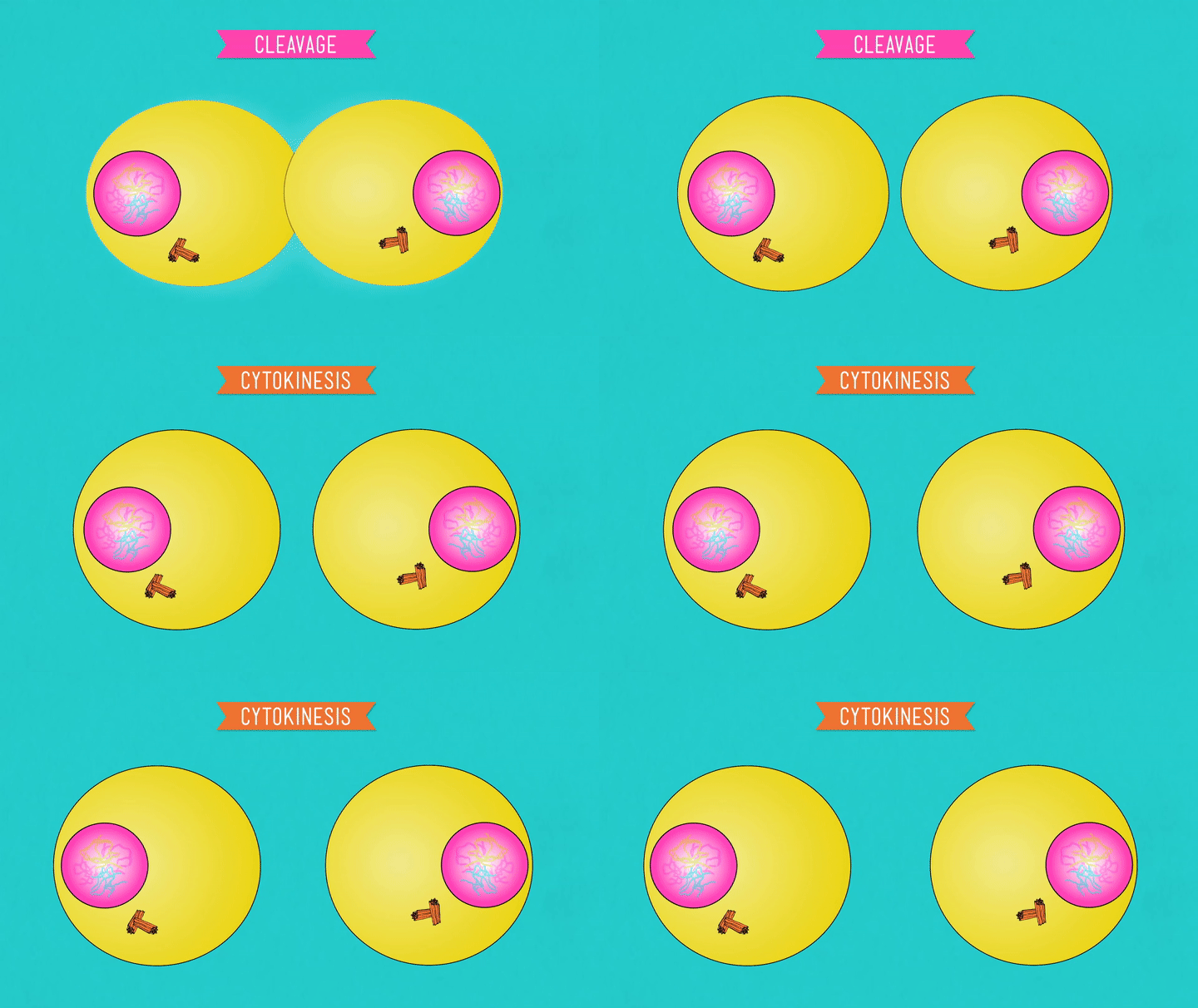
This is the final stage of the cell division, the cytoplasm of the cell divides, resulting in the formation of two daughter cells.


In an animal cell, this is achieved by the appearance of a furrow in the plasma membrane. The furrow gradually deepens and ultimately joins in the center dividing the cell cytoplasm into two (Contractile ring composed of actin and myosin filaments forms around the cell, pinching the cell in two).

In plant cells
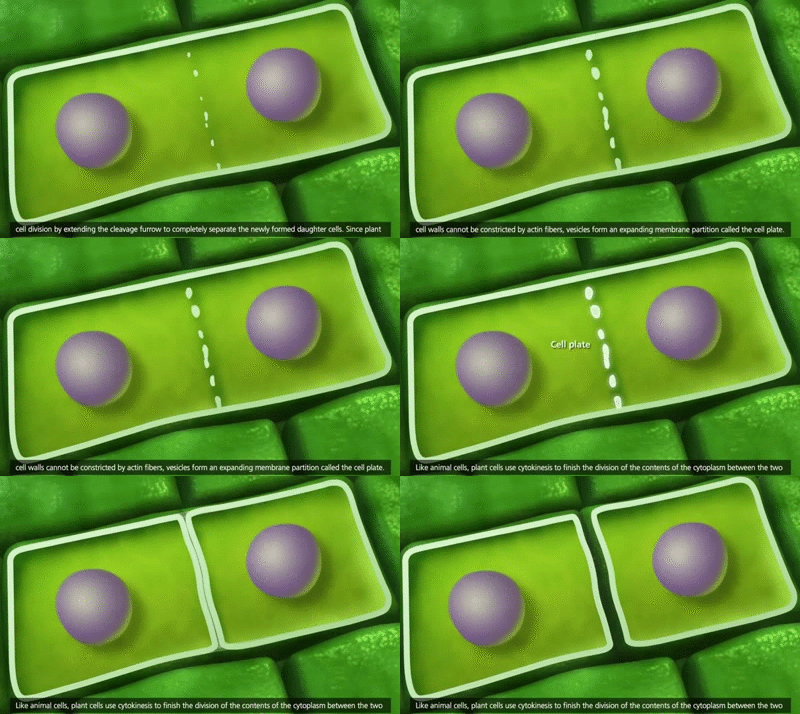
  • Cytokinesis occurs differently due to the presence of cell wall. Instead of cleavage, a cell plate forms in the center of the cell, dividing the cytoplasm into two separate compartments. 
  • The cell plate gradually develops into a new cell wall that separates the two daughter cells (cell wall represents the middle lamella between the walls of two adjacent cells).
  • At the time of cytokinesis, organelles like mitochondria and plastids get distributed between the two daughter cells. 
Failure of Cytokinesis: 

In some organisms karyokinesis is not followed by cytokines as a result of which multinucleate condition arises leading to the formation of syncytium (Ex: Liquid endosperm in coconut). 


Source: https://i1.wp.com/www.differencebetween.com/wp-content/uploads/2012/02/Difference-Between-Plant-and-Animal-Cytokinesis_Figure-1.jpg?resize=529%2C529&ssl=1


Importance of Mitosis:

It allows the cells to divide, grow, repair and reproduce and is essential for the survival and functioning of all living organisms. 


Extra points: 

  • Kinetochores: Small disc-shaped structures at the surface of the centromeres, these structures serve as the sites of attachment of spindle fibers to the chromosomes.
  • Cytokinesis is an essential process for the growth, development and repair of multicellular organisms, as well as for the replication of unicellular organisms. Defects in cytokinesis can lead to abnormal cell division and contribute to the development of diseases, including cancer.
  • In animal cells cytokinesis is by cell furrow formation and in plants it is by cell plate formation.
  • Phragmoplast is responsible for the formation of cell-plate in plant cells during cytokinesis. 

Previous year NEET questions from mitosis:
 
1) Which one of the following never occurs during mitotic division?  
(NEET 2022)

a) Movement of centrioles towards opposite poles
b) Pairing of homologous chromosomes
c)Coiling and condensation of the chromatids
d)Spindle fibers attach to kinetochores of chromosomes

2) select the incorrect statement with reference to mitosis                   
(NEET 2022)

a) Spindle fibers attach to centromere of chromosomes
b) Chromosomes decondense at telophase
c) Splitting of centromere occurs at anaphase
d) All the chromosomes lie at the equator at metaphase

3) The fruit fly has 8 chromosomes (2n) in each cell. During interphase of mitosis, if the number of chromosomes at G1-phase is 8, what would be the number of chromosomes after S-phase?                                        
                                                                        (NEET 2022)

a) 8 
b) 16 
c) 4 
d) 32

4) In a mitotic cycle, the correct sequence of phases is:  
NEET (oct.) 2020

a) S, G1, G2, M
b) G1, S, G2, M
c) M, G1, G2, S
d) G1, G2, S, M

5) Anaphase Promoting Complex (APC) is a protein degradation machinery necessary for proper mitosis of animal cells. If APC is defective in a human cell, which of the following is expected to occur?  
NEET 2017
a) Chromosomes will not condense
b) Chromosomes will be fragmented
c) Chromosomes will not segregate
d) Recombination of chromosome arms will occur

6) Which of the following options gives the correct sequence of events during mitosis               
a) Condensation----Nuclear membrane disassembly----Crossing over----Segregation----Telophase
b) Condensation----Nuclear membrane disassembly----arrangement at equator----centromere division----segregation----telophase
c) Condensation----Crossing over----Nuclear membrane disassembly----Segregation----Telophase
d) Condensation----arrangement at equator----centromere division---Segregation----Telophase

7) Which of the following is not a characteristic feature during mitosis in somatic cells?

a) disappearance of nucleolus
b) Chromosome movement 
c) Synapsis
d) Spindle fibres

8) Spindle fibres attach onto 

a) kinetochore of the chromosome
b) centromere of the chromosome
c) Kinetosome of the chromosome
d) telomere of the chromosome

9) The complex formed by a pair of synapsed homologous chromosomes is called 

NEET 2013
a) equatorial plate
b) kinetochore
c) bivalent
d) axoneme

Answers: 
1) b
2) a
3) a
4) b
5) c
6) b
7) c
8) a
9) c

This link will help you for easy understanding of this topic