Cell cycle and cell division
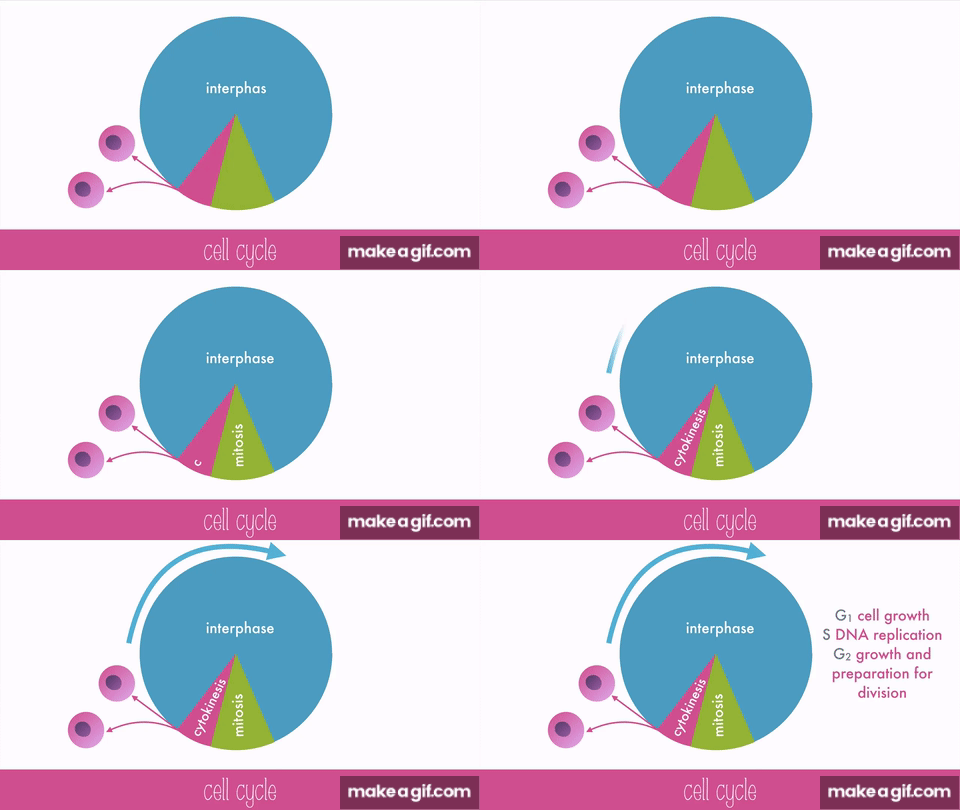
CELL CYCLE: The sequence of events by which a cell duplicates its genome, synthesizes the other constituents of the cell and eventually divides into two daughter cells is termed as “CELL CYCLE” or the cell cycle is the time period between the formation of new daughter cells and their further division. Although cell growth in terms of cytoplasmic increase is a continuous process, DNA synthesis occurs only during one specific stage in the cell cycle and the replicated chromosomes (DNA) are then distributed to daughter nuclei by a complex series of events during cell division and all these events are themselves under genetic control. The time duration of cell cycle varies; In humans it is around 24 hours and in Yeast it will be 90 minutes (or one hour thirty minutes).
Cell cycle is majorly divided into two phases: Interphase and M (mitotic) phase. The interphase is again divided into 3 phases: 1) G1-Phase 2) S-Phase 3) G2-Phase.
M-phase is again divided into Karyokinesis (Nuclear division) and Cytokinesis (cellular division). We can discuss M-phase in detail in PART-2.
| Cell cycle phases (I and M) |
source: https://encrypted-tbn0.gstatic.com/images?q=tbn:ANd9GcRWIMKxvNyS454ng82jZ6xj00I7jSjPyCKeFg&usqp=CAU
INTERPHASE: It is the time period between the end of one mitosis and the beginning of the next cycle. The cells in this stage are metabolically active. Generally, interphase is called resting phase, because the cells do not divide in this stage and it is the longest phase of the cell cycle (95% of the time of cell cycle will be in this phase).
 |
source: https://thumbs.gfycat.com/DefiniteBarrenHarrier-max-1mb.gif |
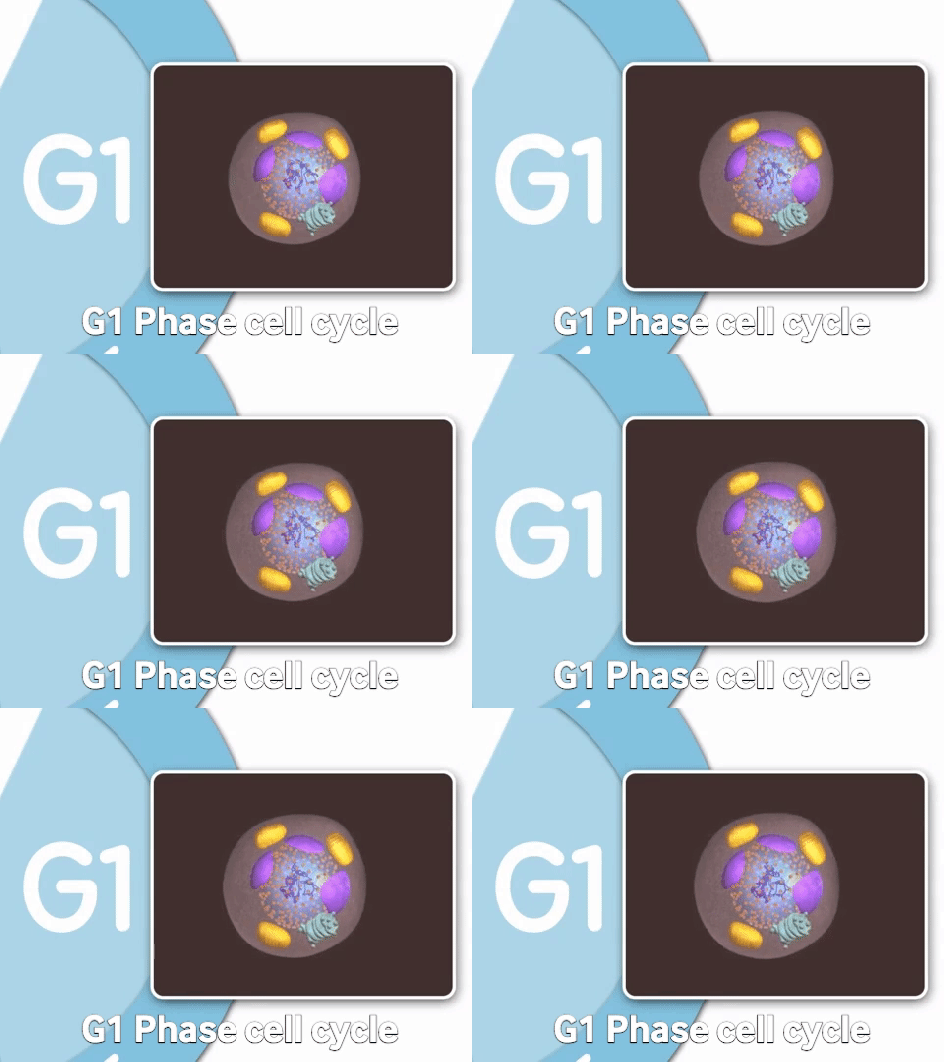
G1-phase (Gap-1 phase/Growth 1/ Post mitotic/ pre synthetic phase): This is the longest phase of interphase and also the whole cell cycle. The major events in this phase are: cell growth (cytoplasmic increase), organelle duplication (ex: ER) and Proteins, nucleotides (ATP, GTP...etc.) are synthesized which are required for cell division.
S-phase (Synthesis phase): Centriole duplication and histone protein synthesis will take place in cytoplasm and DNA replication takes place in the nucleus (without changing the number of chromosomes).

G2 phase/ Gap 2 / Growth-2/ pre-mitotic phase: The major events in this phase are cell growth (cytoplasmic increase). Protein synthesis (specifically Tubulin proteins) and Organelle duplication (Mitochondria and Chloroplast).

G0 (G-not)-phase (Quiescent phase)/ Gap zero phase: When cells are unable to cross G1 to S phase, cell exit the G1 phase and enters into G-not phase or when cells do not want to divide can escape or exit the cell cycle through G1 phase, the cells in this phase are metabolically active. In this phase cells do not necessarily permanently leave the cell cycle but can come back again in cell cycle when “called on” to do so by appropriate extra cellular signal.
EXTRA POINTS:
- The total cell cycle time of a human cell is 24 hours, the G1 phase might last about 11 hours, S phase about 8 hours, G2 about 4 hours, and M about 1 hour.
- There is no cell growth in embryonic cells (no G1 & G2 phases), DNA replication occurs very rapidly and hence the duration of cell cycle for these cells is 30 minutes or less.
- In adult animals some cells cease division altogether (e.g., nerve cells).
Previous year NEET questions:
Q1) The centriole undergoes duplication during
a) S-Phase
b) Prophase
C) Metaphase
D) G2-phase
Q2) Identify the correct statement with regard to G1 phase (Gap-1) of interphase
a) Reorganization of all cell components takes place
b) Cell is metabolically active, grows but does not replicate its DNA
C) Nuclear division takes place
D) DNA synthesis or replication takes place
Q3) Cells in G-not (G0) phase
a) enter the cell cycle
b) suspend the cell cycle
C) terminate the cell cycle
D) Exit the cell cycle
Q4) During cell cycle, DNA synthesis takes place in
a) S-phase
b) G1 phase
C) G2-phase
D) M-phase
Answers:
Q1) a
Q2) b
Q3) d
Q4) a

No comments:
Post a Comment