Showing posts with label class 12 biology questions. Show all posts

Tuesday, February 14, 2023

Cell Cycle and Cell Division- Part-3 (Meiosis)


Meiosis: It involves two sequential cycles of nuclear and cell division called meiosis I and meiosis II but only a single cycle of DNA replication. It is a type of cell division that produces gametes, which are reproductive cells such as eggs and sperm
  • It is a crucial process in sexual reproduction because it produces genetically diverse gametes that can combine during fertilization to create offspring with unique genetic traits. During meiosis, a diploid cell (containing two sets of chromosomes) divides twice, resulting in four haploid cells (containing one set of chromosomes). 
  • The first division separates homologous pairs of chromosomes, while the second division separates sister chromatids. This results in the creation of four genetically diverse haploid cells, each with a unique combination of chromosomes.
  • Meiosis is essential for the formation of gametes in all sexually reproducing organisms, including humans, animals and plants. 
  • The diversity of genetic traits that result from meiosis is a key factor in the survival and evolution of species

Meiosis is divided into two main stages: meiosis I and meiosis II. Each stage is further divided into several sub-stages.

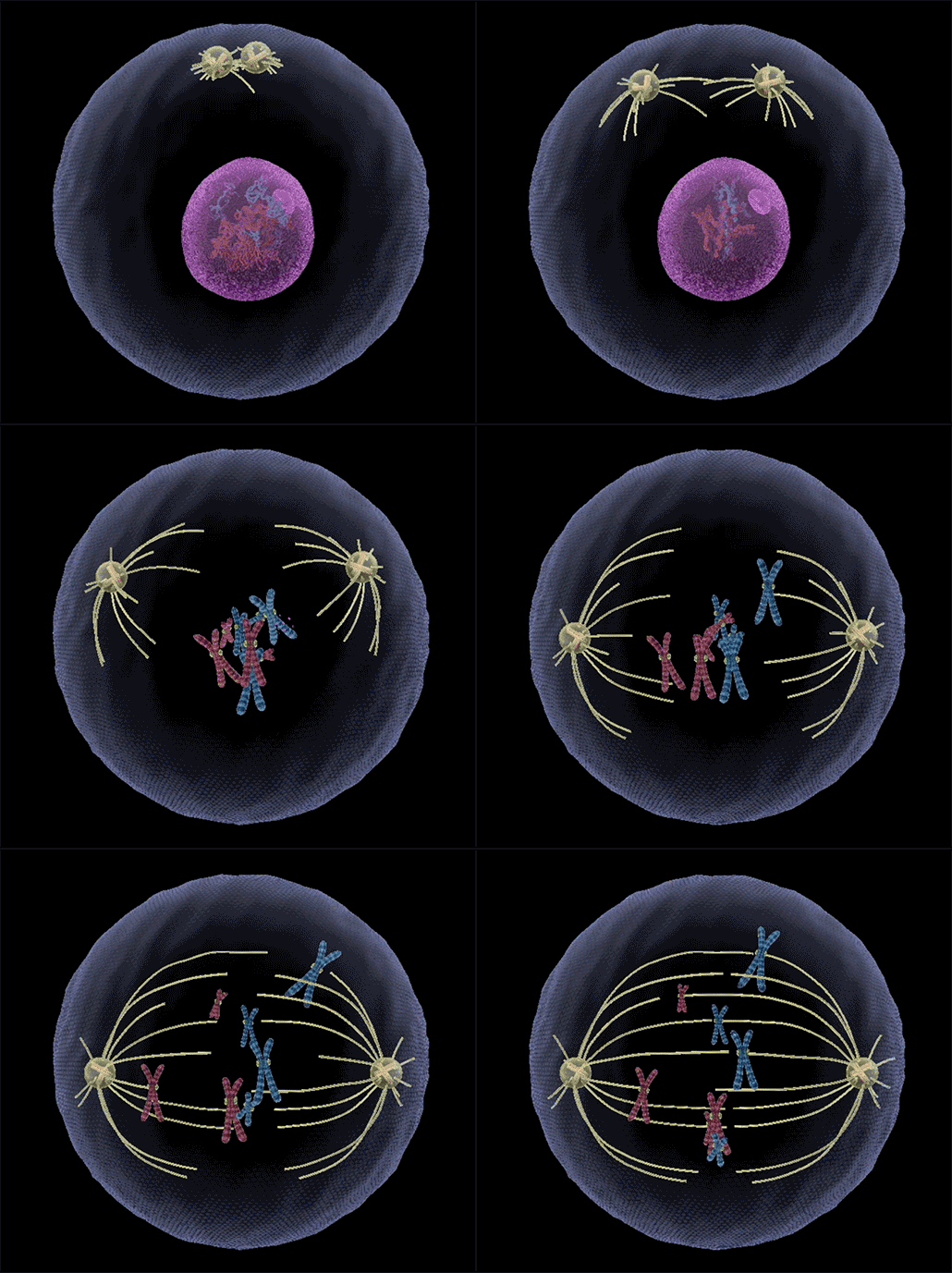
For easy visualization of the entire process of meiosis this gif will help more


Source


Meiosis-1: 

1) Prophase-1Chromosomes condense and pair up with their homologous pair, forming a tetrad. Crossing over may occur during this stage, where genetic material is exchanged
between the paired chromosomes.

2) Metaphase-1: Tetrads align at the cell equator.

3) Anaphase-1: Homologous pairs separate and are pulled to opposite poles of the cell.

4) Telophase-1: The cell divides into two daughter cells, each with one set of chromosomes.


Prophase-1:  Prophase I can be further divided into five sub-stages:
  1. leptotene
  2. zygotene
  3. pachytene
  4. diplotene
  5. diakinesis
1) Leptotene: the chromosomes begin to condense, and the nuclear envelope starts to break down.
2) Zygotene: the homologous chromosomes begin to pair up and undergo synapsis, forming bivalents.
3) Pachytene: the bivalents continue to condense and crossing over occurs.
4) Diplotene: the bivalents start to separate, but remain connected at points called chiasmata. In oocytes of some vertebrates, diplotene can last for months or years.
5) Diakinesis: This is marked by terminalization of chiasmata. By the end of diakinesis, the nucleolus disappears and the nuclear envelope also breaks down. Diakinesis represents transition to metaphase.

Overall, prophase I is a crucial stage in meiosis I that allows for genetic variation through crossing over, pairing of homologous chromosomes, and bivalent formation.


Source:
1) https://d3jlfsfsyc6yvi.cloudfront.net/image/mw:1024/q:85/https%3A%2F%2Fhaygot.s3.amazonaws.com%3A443%2Fcheatsheet%2F11135.PNG
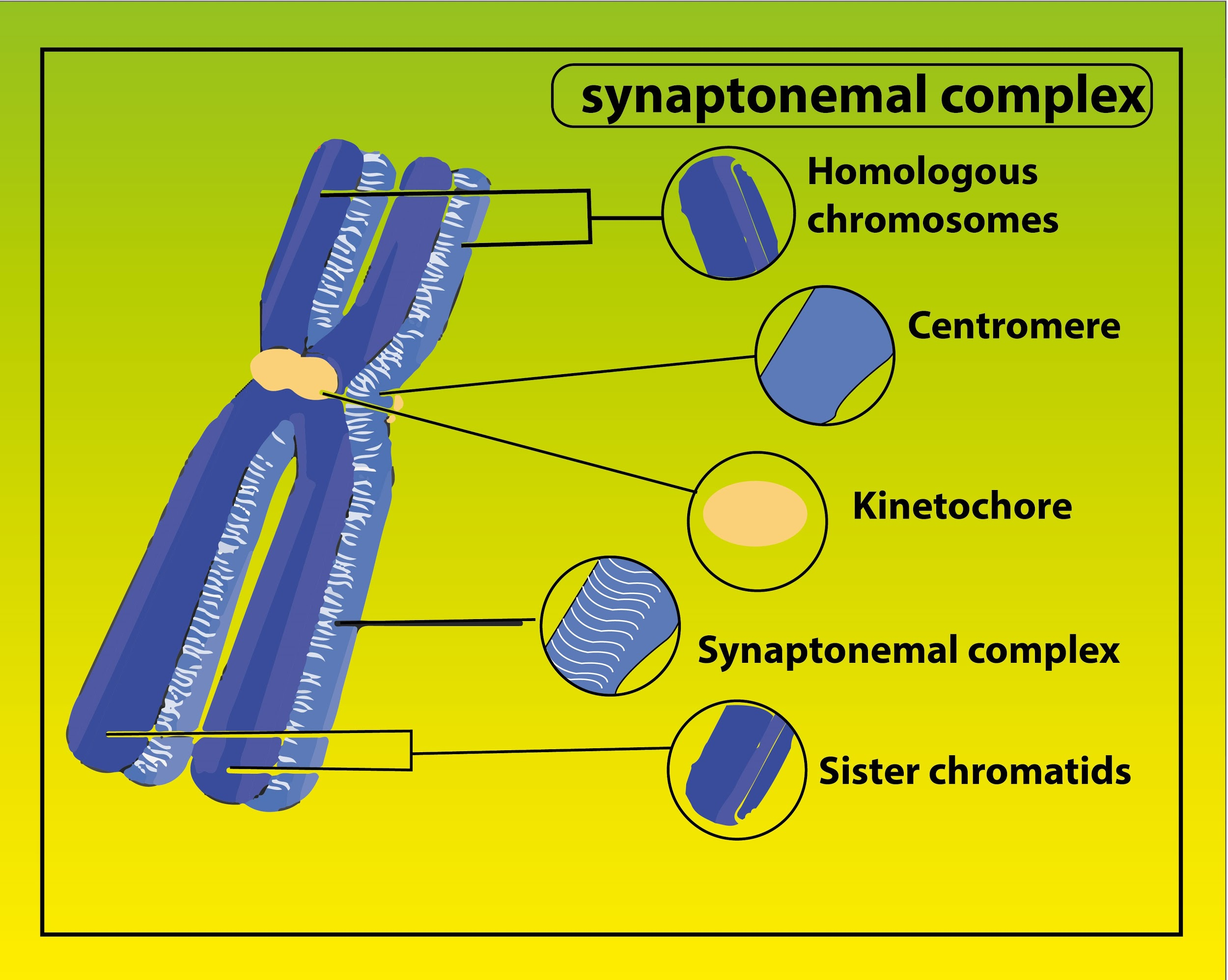
         Synaptonemal complex:  


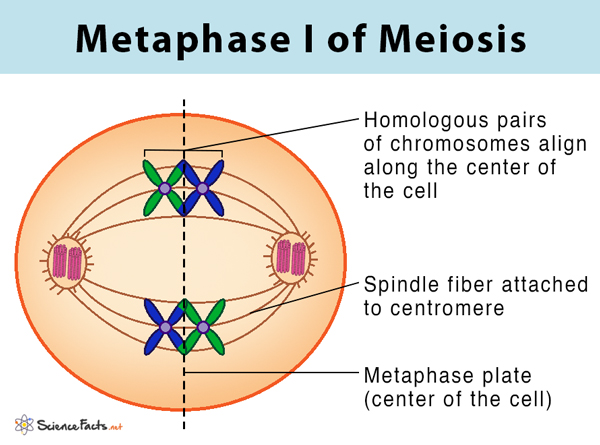
Metaphase-1: The bivalent chromosomes align on the equatorial plate. The microtubules from the opposite poles of the spindle attach to the kinetochore of homologous chromosomes.

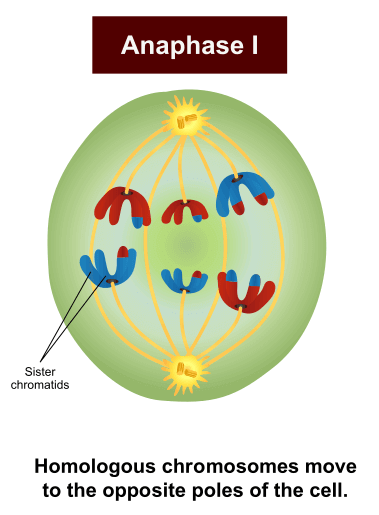
Anaphase-1: The homologous chromosomes separate, while sister chromatids remain associated at their centromeres.


SOURCE


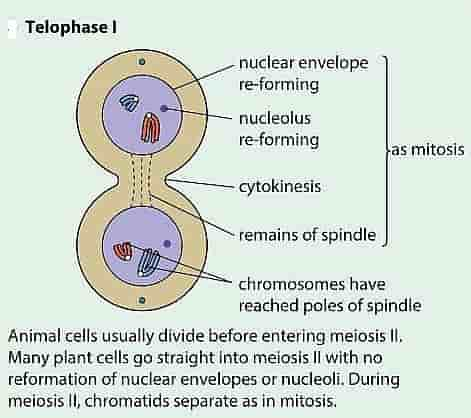
Telophase 1: The nuclear membrane and nucleolus reappear; cytokinesis follows and this is called as dyad of cells. The stage between the two meiotic divisions is called interkinesis and is generally short lived. There is no replication of DNA during interkinesis. Interkinesis is followed by prophase II, a much simpler prophase than prophase I.


Meiosis II: This phase resembles a normal mitosis.


Stages:
  1. Prophase II: Chromosomes condense again and spindle fibers begin to form.
  2. Metaphase II: Chromosomes align at the cell equator. the microtubules from opposite poles of the spindle get attached to the
    kinetochores of sister chromatids.
  3. Anaphase II: Sister chromatids separate and are pulled to opposite poles of the cell by shortening of microtubules attached to kinetochore.
  4. Telophase II: the two groups of chromosomes once again get enclosed by a nuclear
    envelope, the cytokinesis follows resulting in the formation of four haploid daughter cells.

Significance of Meiosis:

1) Genetic diversity

2) Maintenance of chromosome number

3) Genetic recombination

4) Prevention of genetic abnormalities

* Variations are very important for the process of evolution.


Previous year NEET questions: 

1) The appearance of recombination nodule on homologous chromosomes during meiosis characterizes

NEET 2022

a) bivalent
b) sites at which crossing over occurs
c) terminalization
d) synaptonemal complex

Answer: b

2) Regarding meiosis, which of the statements is incorrect?

NEET 2022
                            
a) DNA replication occurs in S-phase of meiosis-II
b) Pairing of homologous chromosomes and recombination occurs in meiosis-I
c) Four haploid cells are formed at the end of meiosis-II
d) There are two stages in meiosis, meiosis-I and II

Answer: a

3) which stage of meiotic prophase shows terminilization of chiasmata as its distinctive feature?
NEET 2021

a) Leptotene
b) Zygotene
c) Diakinesis
d) Pachytene

Answer: c

4) Which of the following stages of meiosis involves division of centromere? 

NEET 2021
a) Metaphase-I
b) Metaphase-II
c) Anaphase-II
d) Telophase-II

Answer: c

5) During meiosis I, in which stage synapsis takes place? 

a) Pachytene
b) Zygotene
c) Diplotene
d) Leptotene

Answer: b

6) Dissolution of the synaptonemal complex occurs during

a) zygotene
b) diplotene
c) leptotene
d) pachytene

Answer: b

7) After meiosis-I, the resultant daughter cells have

a) same amount of DNA as in the parent cell in S-phase
b) twice the amount of DNA in comparision to haploid gamete
c) same amount of DNA in comparision to haploid gamete
d) four times the amount of DNA in comparision to haploid gamete

Answer: b

8) Meiosis takes place in 

NEET 2013

a) Meiocyte  
b) conidia 
c) gemmule  
d) megaspore

Ansewer: a


Cell Cycle and Cell Division-Part-2 (MITOSIS)


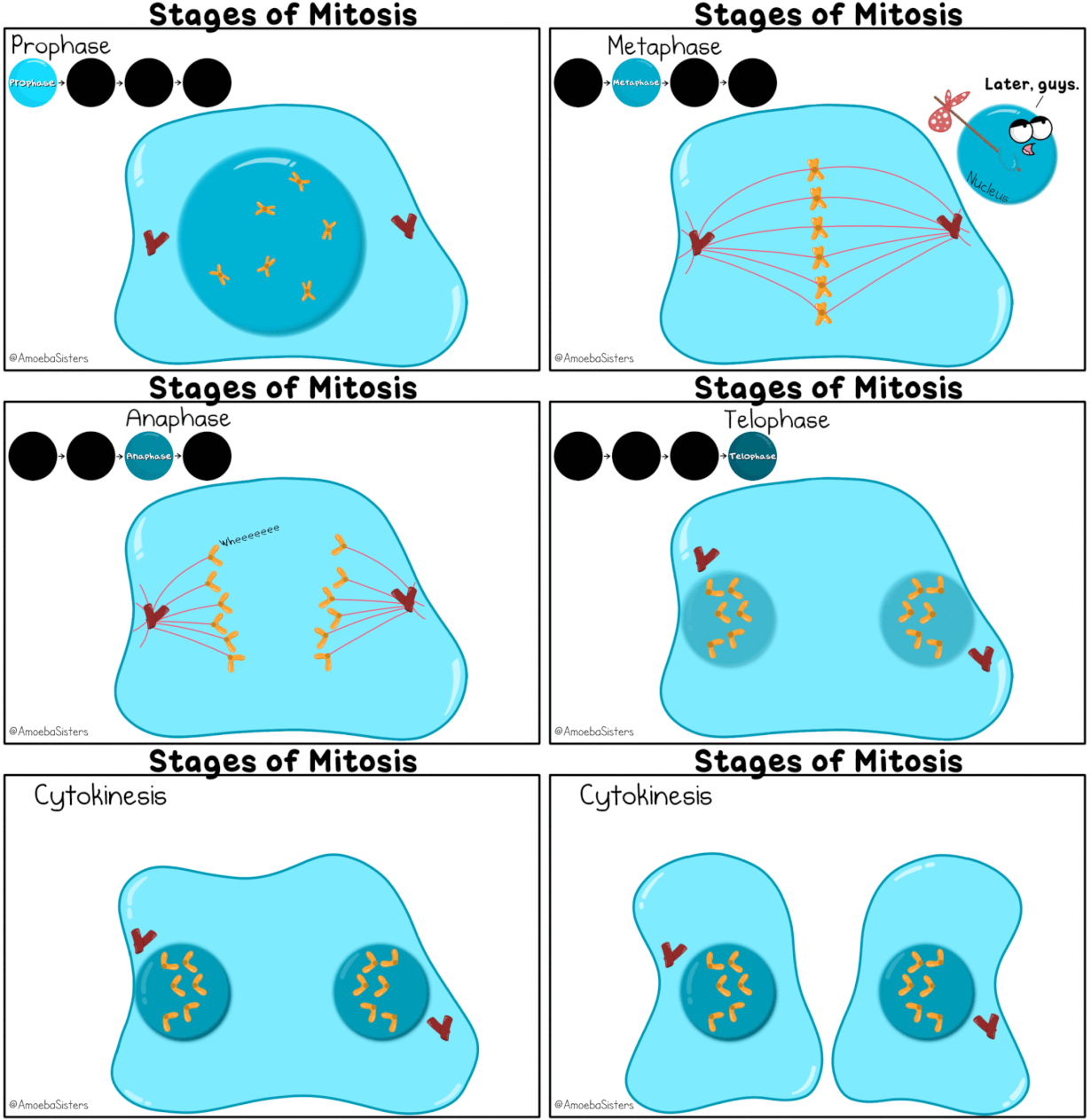
Mitosis is the process of cell division in which a single cell divides into two identical daughter cells, hence called equational division. This process is divided into four stages of nuclear division (karyokinesis). 

1) Prophase

2) Metaphase

3) Anaphase

4) Telophase


Source: https://www.amoebasisters.com/uploads/2/1/9/0/21902384/published/stages-of-mitosis-gif.gif?1530910669

Prophase: 

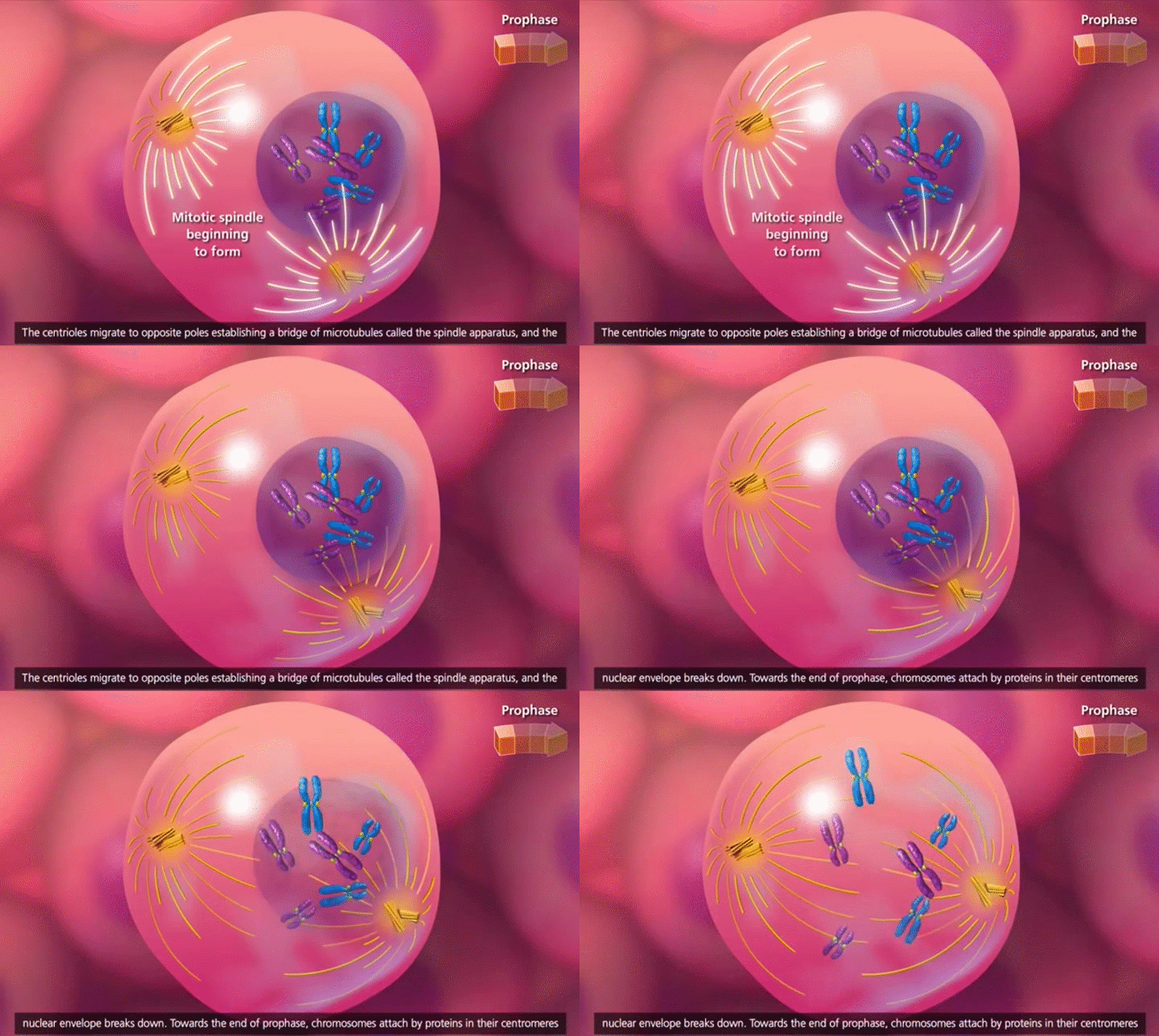
  • This is the first stage of karyokinesis of mitosis. 
  • Prophase is marked by the initiation of condensation of chromosomal material (which becomes visible under a microscope). 
  • The centrosome moves towards opposite poles of the cellChromosomes are seen to be composed of two chromatids attached together at the centromere. 
  • Each centrosome radiates out microtubules called asters. The two asters together with spindle fibers form mitotic apparatus. 
  • Cells at the end of prophase, when viewed under the microscope, do not show Golgi complexes, endoplasmic reticulum, nucleolus and the nuclear envelope.


Metaphase:

  • The complete disintegration of the nuclear envelope marks the start of the metaphase.
  • Chromosomes are highly condensed in this stage, because of that we can clearly observe the structure and morphology of chromosomes under a microscope 
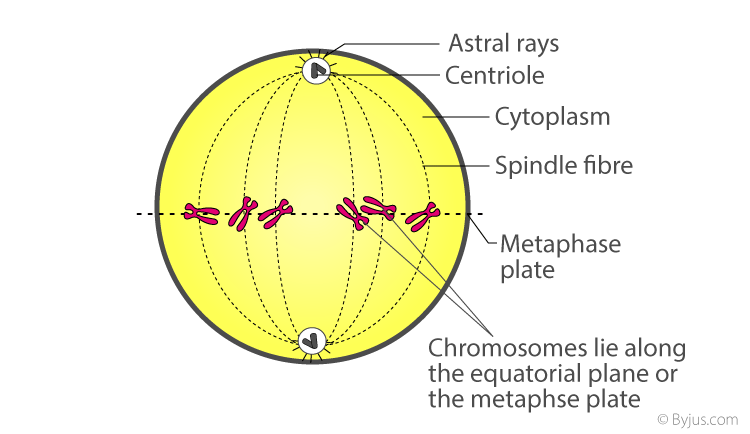
  • During metaphase, the chromosomes align along the equator of the cell (The plane of alignment of the chromosomes at metaphase is referred to as the metaphase plate). This is also called Congression.
  • Congression: Arrangement of all chromosomes at equatorial plate/metaphasic plate.
  • The spindle fibers attach to the centromeres of the chromosomes and prepare to pull them apart.

The key features of metaphase are:
  1. Spindle fibers attach to kinetochores of chromosomes. 
  2. Chromosomes are moved to spindle equator and get aligned along metaphase plate through spindle fibers to both poles.
Q) How many spindle fibers are present in metaphase?
A) 96


Source: 
Anaphase: 
  • During anaphase, the spindle fibers shorten and pull the sister chromatids apart
The key events in this phase are: 
  1. Centromeres split and chromatids separate. 
  2. Chromatids move to opposite poles.
Telophase: 

This is the final stage of karyokinesis. During this stage, the chromosomes reach the opposite ends of the cell and begin to uncoil. The spindle fibers begin to break down and a new nuclear envelope forms around each set of chromosomes.

The key events are:  
  1. Chromosomes cluster at opposite spindle poles and their identity is lost as discrete (seperate) elements.
  2. Nuclear envelope develops around the chromosome clusters at each pole forming two daughter nuclei. 
  3. Nucleolus, Golgi complex and ER reform.


Cytokinesis: (Cytoplasmic division)

This is the final stage of the cell division, the cytoplasm of the cell divides, resulting in the formation of two daughter cells.


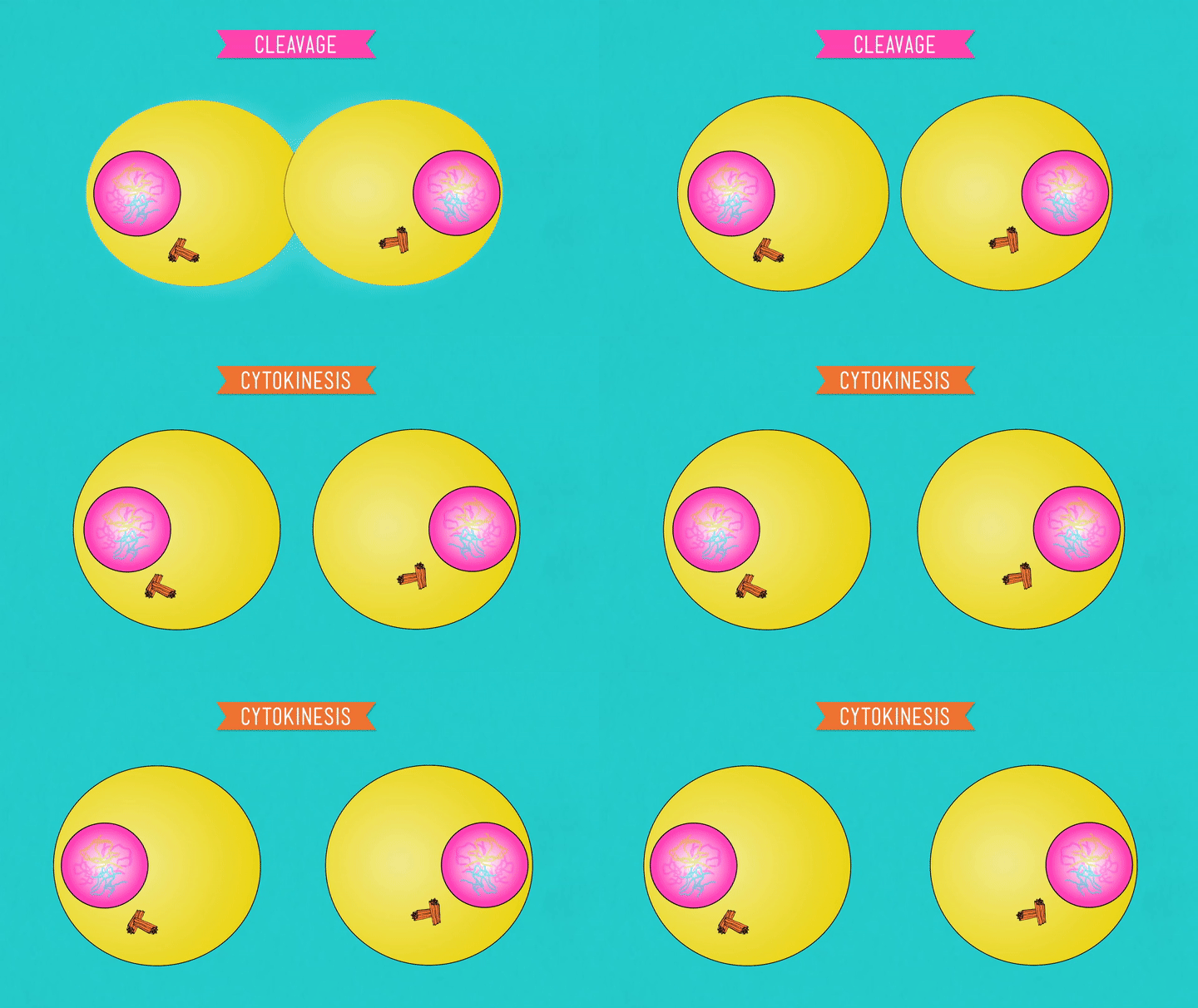
In an animal cell, this is achieved by the appearance of a furrow in the plasma membrane. The furrow gradually deepens and ultimately joins in the center dividing the cell cytoplasm into two (Contractile ring composed of actin and myosin filaments forms around the cell, pinching the cell in two).

In plant cells
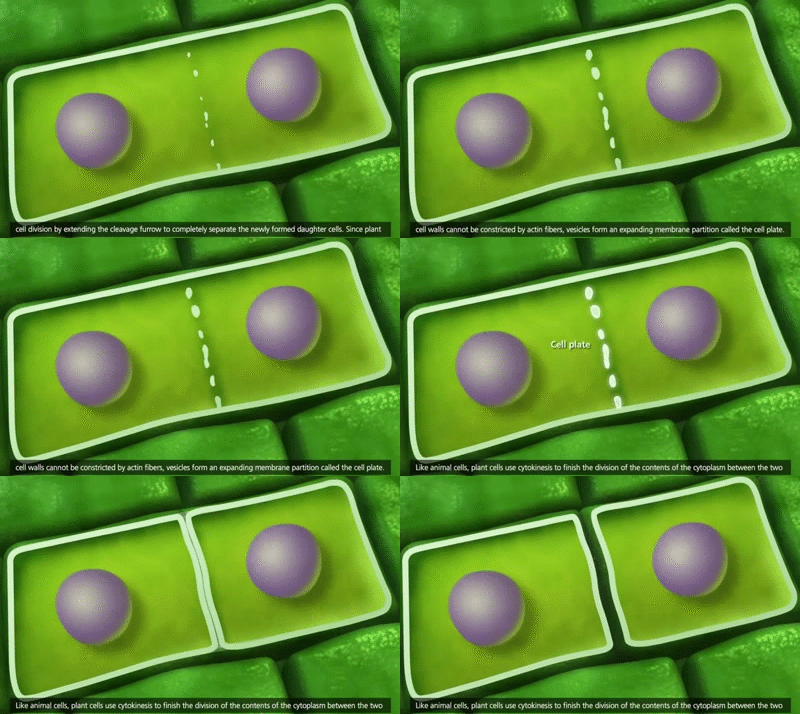
  • Cytokinesis occurs differently due to the presence of cell wall. Instead of cleavage, a cell plate forms in the center of the cell, dividing the cytoplasm into two separate compartments. 
  • The cell plate gradually develops into a new cell wall that separates the two daughter cells (cell wall represents the middle lamella between the walls of two adjacent cells).
  • At the time of cytokinesis, organelles like mitochondria and plastids get distributed between the two daughter cells. 
Failure of Cytokinesis: 

In some organisms karyokinesis is not followed by cytokines as a result of which multinucleate condition arises leading to the formation of syncytium (Ex: Liquid endosperm in coconut). 


Source: https://i1.wp.com/www.differencebetween.com/wp-content/uploads/2012/02/Difference-Between-Plant-and-Animal-Cytokinesis_Figure-1.jpg?resize=529%2C529&ssl=1


Importance of Mitosis:

It allows the cells to divide, grow, repair and reproduce and is essential for the survival and functioning of all living organisms. 


Extra points: 

  • Kinetochores: Small disc-shaped structures at the surface of the centromeres, these structures serve as the sites of attachment of spindle fibers to the chromosomes.
  • Cytokinesis is an essential process for the growth, development and repair of multicellular organisms, as well as for the replication of unicellular organisms. Defects in cytokinesis can lead to abnormal cell division and contribute to the development of diseases, including cancer.
  • In animal cells cytokinesis is by cell furrow formation and in plants it is by cell plate formation.
  • Phragmoplast is responsible for the formation of cell-plate in plant cells during cytokinesis. 

Previous year NEET questions from mitosis:
 
1) Which one of the following never occurs during mitotic division?  
(NEET 2022)

a) Movement of centrioles towards opposite poles
b) Pairing of homologous chromosomes
c)Coiling and condensation of the chromatids
d)Spindle fibers attach to kinetochores of chromosomes

2) select the incorrect statement with reference to mitosis                   
(NEET 2022)

a) Spindle fibers attach to centromere of chromosomes
b) Chromosomes decondense at telophase
c) Splitting of centromere occurs at anaphase
d) All the chromosomes lie at the equator at metaphase

3) The fruit fly has 8 chromosomes (2n) in each cell. During interphase of mitosis, if the number of chromosomes at G1-phase is 8, what would be the number of chromosomes after S-phase?                                        
                                                                        (NEET 2022)

a) 8 
b) 16 
c) 4 
d) 32

4) In a mitotic cycle, the correct sequence of phases is:  
NEET (oct.) 2020

a) S, G1, G2, M
b) G1, S, G2, M
c) M, G1, G2, S
d) G1, G2, S, M

5) Anaphase Promoting Complex (APC) is a protein degradation machinery necessary for proper mitosis of animal cells. If APC is defective in a human cell, which of the following is expected to occur?  
NEET 2017
a) Chromosomes will not condense
b) Chromosomes will be fragmented
c) Chromosomes will not segregate
d) Recombination of chromosome arms will occur

6) Which of the following options gives the correct sequence of events during mitosis               
a) Condensation----Nuclear membrane disassembly----Crossing over----Segregation----Telophase
b) Condensation----Nuclear membrane disassembly----arrangement at equator----centromere division----segregation----telophase
c) Condensation----Crossing over----Nuclear membrane disassembly----Segregation----Telophase
d) Condensation----arrangement at equator----centromere division---Segregation----Telophase

7) Which of the following is not a characteristic feature during mitosis in somatic cells?

a) disappearance of nucleolus
b) Chromosome movement 
c) Synapsis
d) Spindle fibres

8) Spindle fibres attach onto 

a) kinetochore of the chromosome
b) centromere of the chromosome
c) Kinetosome of the chromosome
d) telomere of the chromosome

9) The complex formed by a pair of synapsed homologous chromosomes is called 

NEET 2013
a) equatorial plate
b) kinetochore
c) bivalent
d) axoneme

Answers: 
1) b
2) a
3) a
4) b
5) c
6) b
7) c
8) a
9) c

This link will help you for easy understanding of this topic


Sunday, February 12, 2023

Cell Cycle and Cell Division- Part-1 (Interphase)

 Cell cycle and cell division

We know that a cell is the structural and functional unit of a living organism and all cells reproduce by dividing in two, with each parental cell giving rise to two daughter cells on completion of each cycle of cell division. Cells undergo division for growth and development, replacing old or damaged cells and producing new cells.
The division cycle of most cells consists of four coordinated processes: Cell growth, DNA replication, distribution of the duplicated chromosomes to daughter cells and cell division. In bacteria, cell growth and DNA replication take place throughout most of the cell cycle, and duplicated chromosomes are distributed to daughter cells in association with the plasma membrane. In eukaryotes, the cell cycle is more complex and consists of four discrete phases. Although cell growth is usually a continuous process, DNA is synthesized during only one phase of the cell cycle, and the replicated chromosomes are then distributed to daughter nuclei by a complex series of events preceding cell division.


                                                                                       Source: https://i.makeagif.com/media/11-13-2018/ygKR53.gif


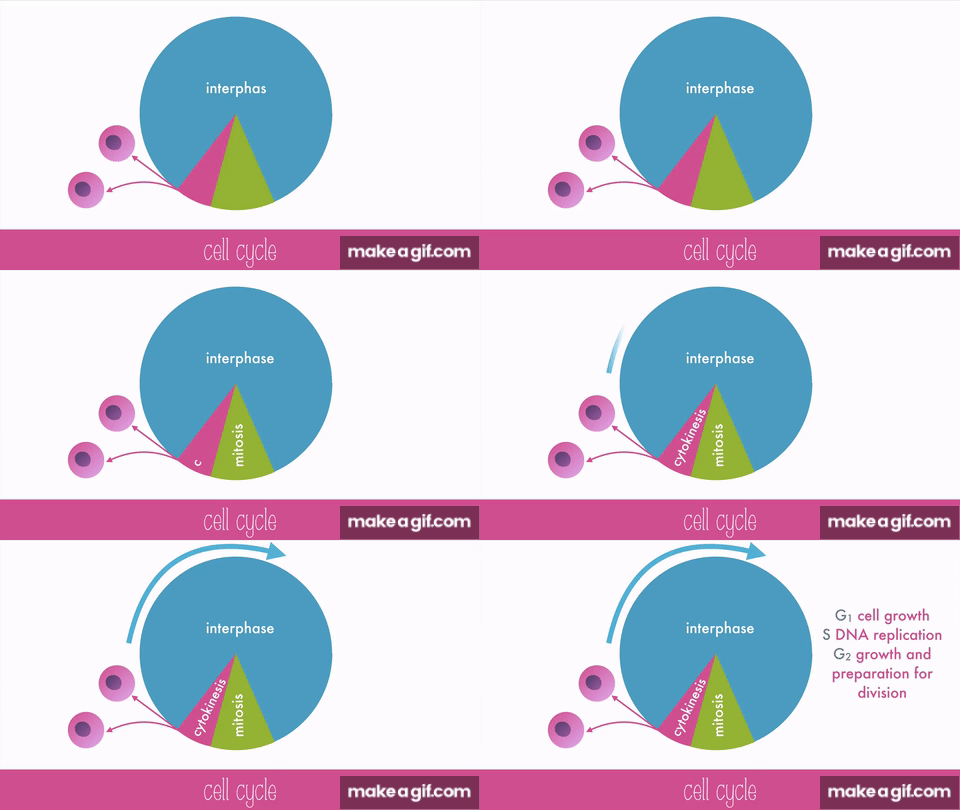
CELL CYCLE: The sequence of events by which a cell duplicates its genome, synthesizes the other constituents of the cell and eventually divides into two daughter cells is termed as “CELL CYCLE” or the cell cycle is the time period between the formation of new daughter cells and their further division. Although cell growth in terms of cytoplasmic increase is a continuous process, DNA synthesis occurs only during one specific stage in the cell cycle and the replicated chromosomes (DNA) are then distributed to daughter nuclei by a complex series of events during cell division and all these events are themselves under genetic control. The time duration of cell cycle varies; In humans it is around 24 hours and in Yeast it will be 90 minutes (or one hour thirty minutes).

Cell cycle is majorly divided into two phases: Interphase and M (mitotic) phase. The interphase is again divided into 3 phases: 1) G1-Phase 2) S-Phase 3) G2-Phase.

M-phase is again divided into Karyokinesis (Nuclear division) and Cytokinesis (cellular division). We can discuss M-phase in detail in PART-2.

Cell cycle phases (I and M)


sourcehttps://encrypted-tbn0.gstatic.com/images?q=tbn:ANd9GcRWIMKxvNyS454ng82jZ6xj00I7jSjPyCKeFg&usqp=CAU


INTERPHASE: It is the time period between the end of one mitosis and the beginning of the next cycle. The cells in this stage are metabolically active. Generally, interphase is called resting phase, because the cells do not divide in this stage and it is the longest phase of the cell cycle (95% of the time of cell cycle will be in this phase).


source
https://thumbs.gfycat.com/DefiniteBarrenHarrier-max-1mb.gif 


G1-phase (Gap-1 phase/Growth 1/ Post mitotic/ pre synthetic phase): This is the longest phase of interphase and also the whole cell cycle. The major events in this phase are: cell growth (cytoplasmic increase), organelle duplication (ex: ER) and Proteins, nucleotides (ATP, GTP...etc.) are synthesized which are required for cell division.


S-phase (Synthesis phase): Centriole duplication and histone protein synthesis will take place in cytoplasm and DNA replication takes place in the nucleus (without changing the number of chromosomes).


G2 phase/ Gap 2 / Growth-2/ pre-mitotic phase: The major events in this phase are cell growth (cytoplasmic increase). Protein synthesis (specifically Tubulin proteins) and Organelle duplication (Mitochondria and Chloroplast).


                                                source: https://kaiserscience.files.wordpress.com/2019/11/g2-cell-cycle-interphase-smaller.gif?w=472

G0 (G-not)-phase (Quiescent phase)/ Gap zero phase: When cells are unable to cross G1 to S phase, cell exit the G1 phase and enters into G-not phase or when cells do not want to divide can escape or exit the cell cycle through G1 phase, the cells in this phase are metabolically active. In this phase cells do not necessarily permanently leave the cell cycle but can come back again in cell cycle when “called on” to do so by appropriate extra cellular signal.


EXTRA POINTS: 


  • The total cell cycle time of a human cell is 24 hours, the G1 phase might last about 11 hours, S phase about 8 hours, G2 about 4 hours, and M about 1 hour. 
  • There is no cell growth in embryonic cells (no G1 & G2 phases), DNA replication occurs very rapidly and hence the duration of cell cycle for these cells is 30 minutes or less.
  •  In adult animals some cells cease division altogether (e.g., nerve cells).
Difference between cell cycle and cell division:

Cell division is just one of several stages that a cell goes through during its lifetime but the cell cycle is a repeating series of events that include growth, DNA synthesis, and cell division.


Previous year NEET questions: 


Q1) The centriole undergoes duplication during     

a) S-Phase

b) Prophase

C) Metaphase

D) G2-phase


Q2) Identify the correct statement with regard to G1 phase (Gap-1) of interphase

a) Reorganization of all cell components takes place 

b) Cell is metabolically active, grows but does not replicate its DNA

C) Nuclear division takes place

D) DNA synthesis or replication takes place 


Q3) Cells in G-not (G0) phase

a) enter the cell cycle

b) suspend the cell cycle

C) terminate the cell cycle

D) Exit the cell cycle


Q4) During cell cycle, DNA synthesis takes place in 

a) S-phase

b) G1 phase

C) G2-phase

D) M-phase


Answers:

Q1) a

Q2) b

Q3) d

Q4) a